Key takeaways
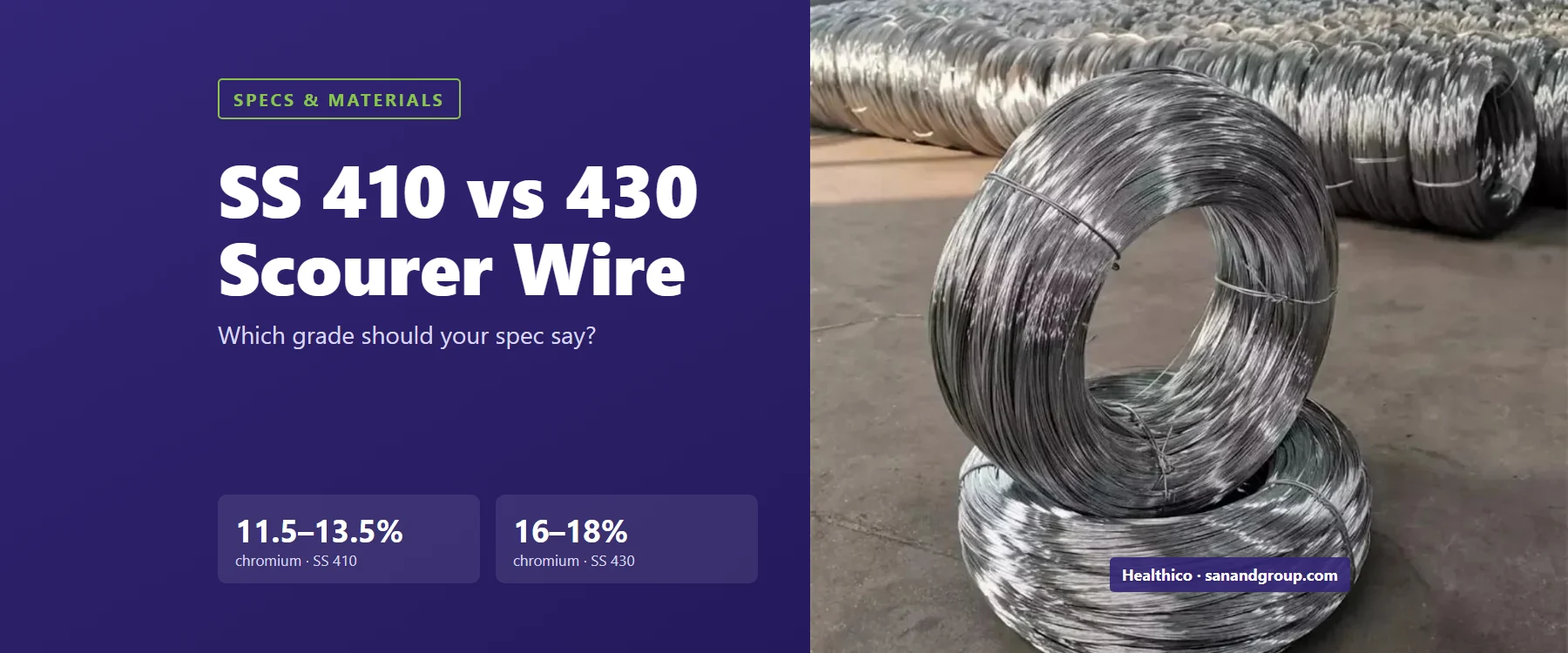
- SS 430 carries about 16–18% chromium against 11.5–13.5% in SS 410, so it resists rust better in damp storage and humid markets.
- SS 410 is harder and usually cheaper – a sound choice for value ranges when packing and shipping are kept dry.
- A magnet cannot tell the two apart. Ask for the mill certificate and check samples with an analyser.
- Grade is only one line of a good spec: ribbon thickness, construction, weight tolerance and acceptance tests matter as much.
Two stainless steel scourers (called stainless steel scrubbers in the US) can look identical on a shelf and behave very differently in a customer’s sink. One lasts for weeks; the other spots with rust in a damp sink caddy or sheds slivers after a few pans. When a private-label brand owner investigates complaints like these, the first line of the specification it reaches for is the steel grade – and for scourers that almost always means a choice between SS 410 and SS 430.
This guide explains what the grade actually changes in a scourer, what it does not change, and how to write it into a specification so that the product you approved is the product that arrives. It is written from the factory floor: we draw our own stainless steel wire, so grade is a decision we make every day, not a line on a supplier’s invoice.
Why the steel grade matters in a scourer
Stainless steel resists rust because chromium forms a thin, self-repairing oxide film on the surface. The more chromium in the alloy, the more stable that film. A scourer is a hard test for it: thin ribbon, a lot of surface area, constant wet–dry cycles, salt and food acids, and often days sitting damp beside a sink. Small differences in chromium show up quickly as rust spots, staining or a gritty feel – the complaints that reach a brand’s customer-care team.
SS 410 vs SS 430 at a glance
| Property | SS 410 | SS 430 |
|---|---|---|
| Family | Martensitic | Ferritic |
| Chromium | 11.5–13.5% | 16–18% |
| European equivalent | EN 1.4006 | EN 1.4016 |
| Hardenable by heat treatment | Yes | No |
| Magnetic | Yes | Yes |
| Rust resistance in a damp kitchen | Moderate – can spot if left wet | Better – more stable passive film |
| Feel in use | Harder, more aggressive cut | Slightly softer, springier ribbon |
| Relative material cost | Lower | Higher (more chromium) |
| Typical fit | Value and promotional ranges | Core and premium ranges, humid markets |
The International Stainless Steel Forum’s grade datasheets put it plainly: grade 410 contains “a minimum of 11.5 per cent chromium, just sufficient to give corrosion resistance properties”, and has less corrosion resistance than 17% chromium ferritic grades such as 430. That one sentence is the heart of the decision.
When SS 410 makes sense
SS 410 is martensitic, so the ribbon is harder and cuts burnt-on food aggressively. It usually costs less than SS 430. For value and promotional ranges with fast shelf turnover, sold in drier climates, and packed and shipped dry, SS 410 is a sound and widely used choice.
When SS 430 is worth the extra chromium
SS 430 is the better fit when the range is positioned on durability, when product will sit in humid coastal warehouses – the Gulf is a typical example – or on long ocean transits to markets such as Europe or Australia, or when a brand has seen rust complaints before. The extra chromium buys a margin of safety against the conditions you do not control after the product leaves the factory.
What the grade does not decide
Grade is only one variable. Two SS 430 scourers can still perform very differently because of:
- Wire and ribbon thickness. Finer ribbon gives a softer, gentler scourer; heavier ribbon is more aggressive and longer-lasting but can mark soft surfaces.
- Construction. Knitted mesh scourers are springy and hold their shape; spiral-wound scourers feel and wear differently.
- Weight per piece. With the same wire and construction, more grams of steel generally means a longer life. Underweight product is a quiet way for value to leak out of a range.
- Wire source. Wire drawn from rod of a known grade gives consistent chemistry. Mixed or recycled wire of unknown origin is a common cause of batch-to-batch rust problems.
From wire rod to scourer ribbon
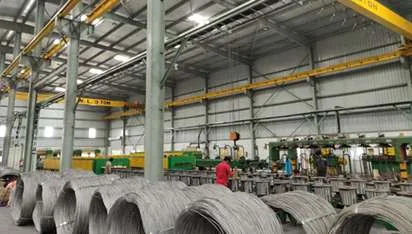
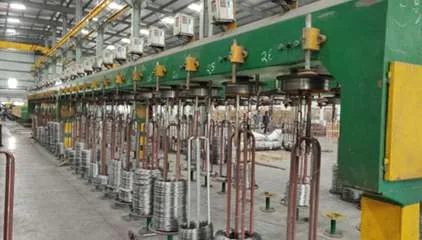
Most scourer makers buy finished wire. We start one step earlier. Stainless steel wire rod, around 5.5 mm in diameter, is drawn down through a series of dies on our own lines to fine wire of around 0.7 mm, which is then flattened into the ribbon a scourer is made from. Controlling that step means the grade, the gauge and the surface finish are set inside one factory.
Why a magnet test is not enough
A magnet is often suggested as a quick grade check. It is useful for one thing only: telling austenitic SS 304, which is largely non-magnetic when annealed, apart from the 400-series grades. SS 410 and SS 430 are both magnetic, so a magnet cannot separate them. If the grade matters to your range – and the rust complaint rate says it does – ask for the steel mill’s test certificate and verify a production sample with a handheld XRF or OES analyser.
How to write the grade into your specification
A specification that prevents grade substitution has these lines:
- Grade: SS 410 or SS 430 (EN 1.4006 or EN 1.4016), stated explicitly.
- Proof: mill test certificate per wire lot, traceable to production batches.
- Verification: chemical check of finished samples by XRF/OES at pre-production and pre-shipment.
- Ribbon and construction: thickness range and knitted or spiral construction.
- Weight: target grams per piece with a tolerance, checked on ten pieces per lot.
- Acceptance tests: a rust soak test and a shedding check against a sealed golden sample.
- Packing: product and cartons packed dry, with moisture protection for long ocean transits.
How to test samples in a day
You do not need a laboratory to screen samples. Leave a few pieces of each grade damp, or in a shallow tray of tap water with a little salt, for several days and compare them side by side. Scrub a dry pan firmly for a minute and wipe it with a white cloth to check for shedding. Weigh ten pieces from each sample set; a wide spread points to weak process control. For a formal result, laboratories run standardised salt-spray tests such as ASTM B117 or ISO 9227.
Further reading: where the US actually buys its steel scrubbers, and why India is now the No. 2 source – Not Just China: India Is Now America’s No. 2 Steel Scrubber Source.
Specifying a private-label scourer range?
Send us your target grade, weight and pack format. We draw our own wire, so we can sample both grades side by side.
Frequently Asked Questions
Related Products
Get a Quote
Find your market
Private-label and OEM cleaning tools made in India for brands, retailers and importers. Choose your market for local requirements, packaging and shipping details:
North America
Europe
Middle East & Africa
Asia-Pacific
Latin America
References

WRITTEN BY
Pradeep Soni
Head of Global Sales & Marketing, Healthico Quality Products Pvt. Ltd. (S.Anand Group)
Pradeep works with brand owners, importers and sourcing teams on private-label stainless steel scourers and cleaning tools – from grade and specification choices to samples, compliance documents and container planning.
Manufacturing since 1964. Cleaning products since 1998. Healthico incorporated 2018.
ISO 9001 & ISO 14001 certified · amfori BSCI audited